
Restricted License After Points Suspension — California
Get My Point-Reduction Insurance QuoteYou Hit the Points Threshold and Need to Drive
You received a DMV notice yesterday that your California license is suspended as a negligent operator. The letter says you accumulated 4 points in 12 months, or 6 points in 24 months, or 8 points in 36 months — whichever threshold you crossed first. You have a job Monday morning, or your kids need rides to school, or you care for an aging parent who cannot drive themselves. The suspension is immediate, and you need legal driving authority back.
California's restricted license program allows points-suspension drivers to continue driving for work and specific essential purposes during the suspension period. But the pathway is narrower than most drivers expect when they file the application, and the $125 reissue fee does not buy back full driving privileges. This article walks the specific procedural steps, the route restrictions you will face, the documentation the DMV requires, and what happens if the underlying violations also triggered SR-22 separately.
“California's restricted license does not cover childcare, errands, or personal medical appointments — only work and DUI program attendance qualify.”

Find Coverage While Your Points Come Down
Get My Point-Reduction Insurance Quote$125
CA Restricted License Fee
California charges a $125 reissue fee to process and issue a restricted license after negligent operator suspension. This fee is separate from any SR-22 filing costs or DUI program enrollment fees if those apply to your case.
California DMV fee schedule
Restricted License Covers Work Routes Only
California's restricted license for negligent operator suspensions authorizes driving to and from work, within the scope of employment if your job requires driving, and to and from a court-ordered DUI treatment program if applicable. Those three purposes exhaust the approved routes. Childcare pickups, grocery runs, medical appointments for yourself, and errands are not covered unless they occur during a work commute or within your employment scope.
The restriction is purpose-based, not time-based. California does not impose blanket time-of-day driving windows. You can drive at any hour as long as the trip falls within the approved purposes. But driving your child to school on the way to work does not become legal just because the timing overlaps — the restriction is strict about trip purpose, and a traffic stop outside approved use results in a violation of restriction charge and immediate revocation of the restricted license.
Most drivers discover this limit after they have already paid the $125 fee and received the restricted license. They assumed restricted meant reduced, not categorically limited to work. If your daily life requires driving beyond work commutes — and most suspended drivers' lives do — the restricted license solves one problem and leaves others unaddressed.
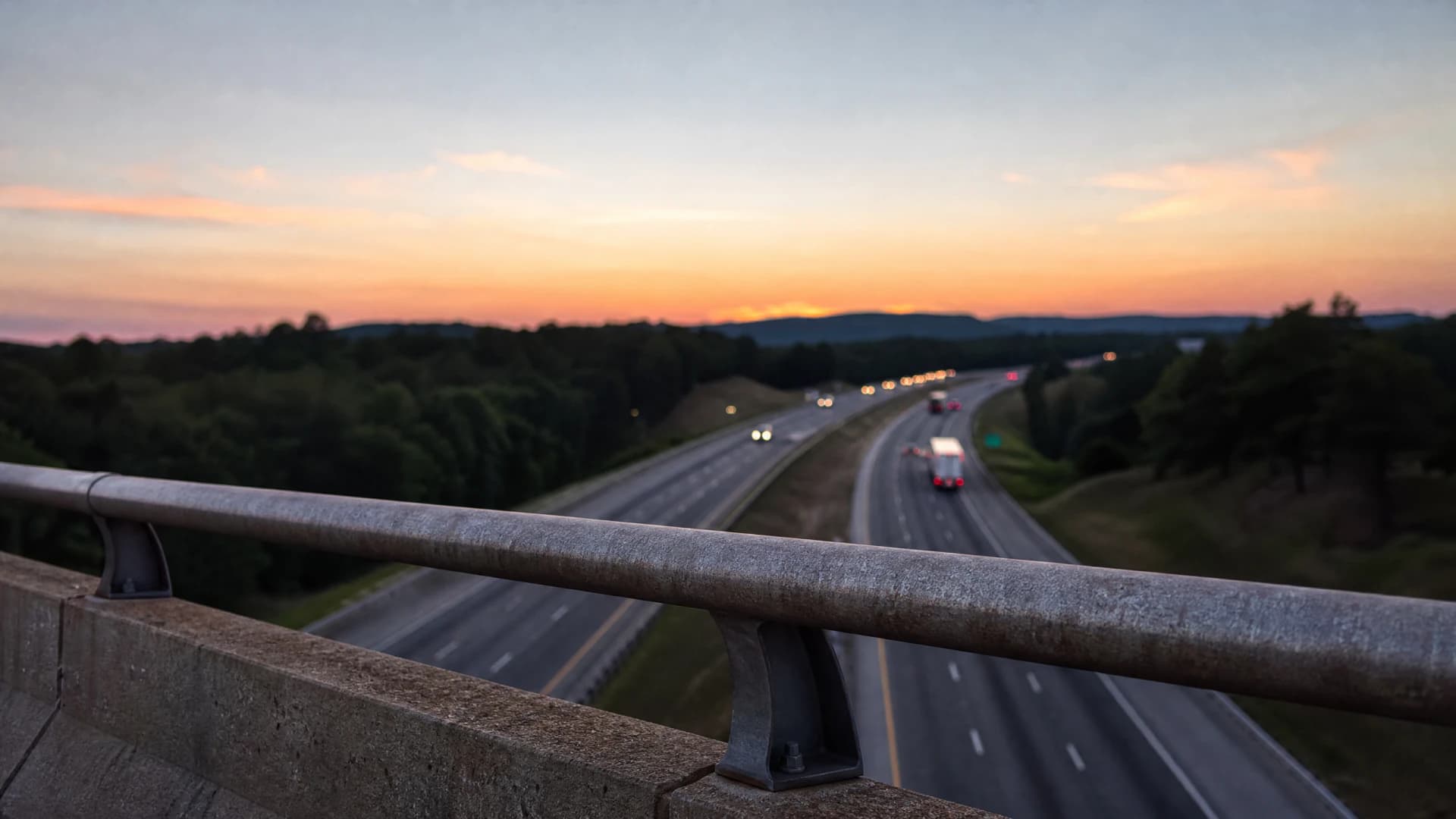
California's restricted license does not cover childcare, errands, or personal medical appointments. Only work, employment-related driving, and DUI program attendance qualify.
Related Articles
Cheapest Insurance With Points in California
5/29/2026

Virginia Points Suspension Restricted License
5/29/2026
CA Points-Suspension Auto Insurance
5/29/2026

CA Zero-Down Insurance After Points
5/29/2026
VA Restricted License After Points: Court Petition Path
5/18/2026

Point Threshold Math: 39 Point-System States Compared
5/18/2026
Which Violations Block Restricted License Eligibility
Not all points-suspension drivers qualify for restricted privileges. California denies restricted licenses to drivers whose most recent violation involved reckless driving causing injury, hit-and-run with injury or property damage exceeding $1,000, vehicular manslaughter, or any felony involving a motor vehicle. If your final ticket — the one that pushed you over the points threshold — falls into one of those categories, the DMV will deny your restricted license application regardless of SR-22 filing or fee payment.
Speed-related violations, distracted driving citations, rolling stops, and minor traffic offenses do not block restricted license eligibility. Most negligent operator suspensions result from accumulating multiple small violations rather than a single catastrophic event, and those drivers remain eligible. But if your record includes a reckless driving charge reduced from DUI, or if you left the scene of an accident that contributed points, check the violation codes on your DMV record before filing the restricted license application. The $125 fee is non-refundable, and the DMV does not issue partial approvals.
If you are unsure whether your recent violations disqualify you, request a copy of your official driving record from the DMV before applying. The record shows each violation's code, the points assessed, and the conviction date. Match those codes against the restricted license eligibility exclusions published on the DMV website. Discovering ineligibility after paying the fee wastes money you could have applied to alternative transportation during the suspension period.
3 years
SR-22 Filing Duration CA
California requires SR-22 filing for 3 years following negligent operator restricted license approval. The 3-year period starts from the date the DMV receives the SR-22, not from your conviction date or suspension start date. Any lapse in SR-22 coverage during that period triggers immediate re-suspension.
California Vehicle Code Section 16070
Processing Timeline and What Delays Approval
California DMV does not publish a fixed processing timeline for restricted license applications after negligent operator suspension. Most drivers report approval within 2 to 4 weeks from the date they submit the application and fee, assuming SR-22 filing is already on record and no eligibility issues delay review. But processing slows when the DMV flags your record for manual review, when your SR-22 filing has not yet appeared in their system, or when you owe unpaid traffic fines on unrelated tickets.
The most common delay: drivers apply for the restricted license before their carrier has filed the SR-22. Insurance companies typically file SR-22 within 1 to 3 business days after you purchase the policy, but some non-standard carriers take longer, and the DMV's electronic system updates overnight rather than in real time. If you apply Monday and your carrier files the SR-22 Tuesday, the DMV may not see the filing in their system until Wednesday morning. The application sits in pending status until the SR-22 cross-check clears. Applying too early does not speed up the process — it just creates confusion when you call the DMV for a status update and they tell you no SR-22 is on file.
Next Step: Compare SR-22 Carriers by Monthly Rate
You need SR-22 filing before the DMV will approve your restricted license application. Not all carriers writing in California accept negligent operator cases, and the monthly premium spread between carriers can exceed $80 for the same coverage minimums. Bristol West, Dairyland, Geico, Progressive, The General, Acceptance, Infinity, Kemper, and National General all write SR-22 policies in California and accept multiple-violation drivers. State Farm and USAA file SR-22 but may non-renew after the filing or decline new business for drivers with 4+ points in 12 months.
Compare monthly rates from at least three carriers before committing. Quote the state minimum liability limits first: $30,000 per person bodily injury, $60,000 per accident, $15,000 property damage. If the monthly premium exceeds your budget, raising your deductible will not help — liability-only policies do not carry deductibles. The rate reflects your point total, your age, your ZIP code, and the carrier's underwriting tolerance for negligent operator risk. Some carriers quote $110/month for the same driver another quotes $190/month. The DMV does not care which carrier files your SR-22 as long as the filing reaches them before you apply for the restricted license.
Documentation the DMV Requires Before Approval
You must submit proof of SR-22 insurance filing before the DMV will issue a restricted license. SR-22 is required for negligent operator suspensions in California, even though the suspension trigger is point accumulation rather than a single severe offense. The SR-22 filing proves you carry at least the state minimum liability coverage: $30,000 per person for bodily injury, $60,000 per accident, and $15,000 for property damage. Your carrier files the SR-22 electronically with the DMV; you do not mail a paper certificate. The DMV cross-checks your license number against incoming SR-22 filings and will not process your restricted license application until the filing appears in their system.
If one of the violations that contributed to your point total was a DUI, the DMV also requires proof of enrollment in a court-ordered DUI program before restricted license approval. The program length depends on your BAC at arrest and prior offense count: 3 months for wet reckless, 9 months for standard first DUI, 18 months for second DUI or high BAC first offense, 30 months for third or subsequent DUI. You do not need to complete the program before applying for the restricted license — enrollment confirmation is sufficient — but you must remain enrolled and attending throughout the restricted period or the DMV will revoke the license.
Get Your Free Quote
Get My Point-Reduction Insurance QuoteFrequently Asked Questions
Can I use a California restricted license to drive my kids to school?
No. California's restricted license for negligent operator suspensions covers driving to and from work, within the scope of employment, and to court-ordered DUI programs only. Childcare pickups, school drop-offs, and errands are not approved purposes. Driving outside approved routes results in a violation of restriction charge and immediate revocation of the restricted license.
How long does California require SR-22 filing after a points suspension?
California requires SR-22 filing for 3 years from the date the DMV receives the filing, not from your conviction or suspension date. Any lapse in SR-22 coverage during that period triggers immediate re-suspension of both your restricted license and your full license once reinstated.
Does California's restricted license cost extra beyond the normal license fee?
Yes. California charges a $125 reissue fee to process and issue a restricted license after negligent operator suspension. This fee is separate from SR-22 filing costs, DUI program fees if applicable, and the eventual reinstatement fee you pay when the suspension period ends.
What happens if I drive outside approved routes on a California restricted license?
Driving outside approved purposes — work commute, employment-related driving, or DUI program attendance — results in a violation of restriction charge under California Vehicle Code Section 14601.2. The DMV revokes your restricted license immediately, and you face additional criminal penalties including possible jail time and extended suspension.
Can I get a restricted license in California if my points came from a reckless driving ticket?
It depends. If the reckless driving caused injury or was part of a felony, California denies restricted license eligibility. If the reckless driving was a standalone misdemeanor with no injury, you remain eligible for a restricted license as long as you file SR-22 and pay the $125 reissue fee.
How do I know if my SR-22 filing reached the California DMV?
Contact the DMV driver safety office at 916-657-6525 and provide your license number. The SR-22 filing appears in their system 1 to 3 business days after your carrier submits it electronically. Do not apply for a restricted license until you confirm the filing is on record — applications without SR-22 on file sit in pending status and delay your approval.