
Wisconsin Point System: Threshold Math and Reinstatement Steps
Get My Point-Reduction Insurance QuoteHow Wisconsin's 12-Point Suspension Threshold Works
Wisconsin suspends your license when you accumulate 12 demerit points within 12 months. The 12-month window is calculated backward from the date of each new violation, not by calendar year. If you receive a speeding ticket today that pushes you to 12 points, WisDOT counts every violation dated within the prior 365 days—even violations from last calendar year still count if they fall inside that rolling window.
Points stay on your Wisconsin driving record for 5 years from the conviction date, but the suspension trigger only looks at the most recent 12 months. A 6-point reckless driving conviction from 18 months ago won't count toward the current suspension threshold, but it still appears on your record and affects your insurance rates.
Common point values: speeding 11-19 mph over adds 3 points, 20-24 mph over adds 4 points, 25+ mph over adds 6 points, following too closely adds 4 points, failure to yield adds 4 points, improper passing adds 4 points, texting while driving adds 4 points. Two speeding tickets and one distracted-driving offense inside 12 months easily cross the threshold. WisDOT mails a suspension notice when you hit 12 points; the suspension takes effect 30 days after the notice date unless you successfully petition for an occupational license.

Occupational License Eligibility for Points-Cause Suspensions
Wisconsin law allows you to apply for an occupational license immediately when suspended for point accumulation—no mandatory waiting period applies to points-cause cases. This is a procedural advantage over OWI suspensions, which impose a 30-day hard period before occupational license eligibility opens for first offenses and 90 days for repeat OWI within 10 years.
You petition the circuit court in the county where you live or where the most recent violation occurred. The court has full discretion to grant or deny the petition based on your demonstrated need for essential driving. Essential purposes include work, school, medical appointments, church, and alcohol or drug treatment programs required by court order. The court defines your specific driving schedule—maximum 12 hours per day and 60 hours per week under Wis. Stat. § 343.10.
The petition process requires proof of employment or other essential need, completed application forms, court filing fee payment (varies by county, typically $50–$100), and SR-22 proof of insurance filing before the court issues the order. Once the court grants your petition, you take the signed order to a WisDOT DMV service center to receive the physical occupational license document. This two-step process—court order first, DMV issuance second—is unique to Wisconsin and trips up drivers who assume DMV handles the entire application.


SR-22 Filing Requirement and Insurance Impact
Wisconsin requires SR-22 filing for all occupational license holders, regardless of the underlying suspension cause. The SR-22 is a certificate your auto insurance carrier files electronically with WisDOT certifying you carry at least Wisconsin's minimum liability coverage: $25,000 bodily injury per person, $50,000 bodily injury per accident, $10,000 property damage.
Most carriers charge a one-time SR-22 filing fee of $15–$50. The larger cost is the premium increase triggered by your violation history. Multiple moving violations within 12 months signal high risk to underwriters. Expect your premium to increase 40%–80% compared to your pre-suspension rate, even if none of the individual violations were major offenses. High-risk auto insurance carriers such as Progressive, GEICO, Dairyland, Bristol West, and The General write SR-22 policies in Wisconsin and specialize in multi-violation profiles.
Your SR-22 filing must remain active for 3 years from the date WisDOT requires it—typically from your occupational license issue date. If your policy lapses or cancels during the 3-year period, your carrier notifies WisDOT electronically within 10 days, and WisDOT suspends your license again immediately. The 3-year clock resets from the new filing date after any lapse.
Defensive Driving Course and Point Reduction
Wisconsin allows drivers to remove 3 demerit points from their record by completing a state-approved traffic safety course once every 3 years. The course does not reverse the suspension once WisDOT issues the notice, but completing it before you hit 12 points can prevent suspension entirely.
If you're currently at 9 or 10 points and have a pending citation that could push you over, completing the course before the new conviction posts removes 3 points and may keep you below the threshold. The course typically costs $30–$80, runs 4–6 hours online or in-classroom format, and requires a certificate of completion filed with WisDOT. The 3-point credit applies within 30 days of WisDOT receiving the certificate.
Once suspended, the defensive driving credit does not shorten your suspension period or waive the occupational license requirement. The credit helps only if you use it preemptively or if you want to reduce your total point balance for insurance rating purposes during the suspension. Completing the course while holding an occupational license demonstrates proactive risk mitigation to underwriters during renewal.

Find Coverage While Your Points Come Down
Get My Point-Reduction Insurance Quote
Reinstatement Process After Suspension Period Ends
Wisconsin's standard points-cause suspension lasts 2 months for a first offense, 4 months for a second offense within 4 years, and 6 months for a third offense within 4 years. The suspension clock starts on the effective date listed in your WisDOT notice, not the date of the final violation.
To reinstate your full driving privileges after the suspension period ends, you must pay a $60 reinstatement fee to WisDOT, maintain active SR-22 filing for the full 3-year required period, and complete any court-ordered driver improvement courses. If multiple suspensions or revocations appear on your record concurrently, WisDOT assesses a separate $60 fee for each underlying action—total reinstatement fees can exceed $60 if violations stacked.
You do not need to retake the written or road test for a points-cause suspension unless your license was revoked rather than suspended. Revocation (a more severe penalty typically reserved for OWI, serious injury crashes, or habitual offender declarations under Wis. Stat. § 343.345) requires full re-examination. Standard points-cause suspensions allow reinstatement by fee payment and proof of SR-22 filing alone. Verify your reinstatement eligibility at a WisDOT service center before the suspension period expires to avoid any gap in your occupational license coverage.
Occupational License Restrictions and Violation Consequences
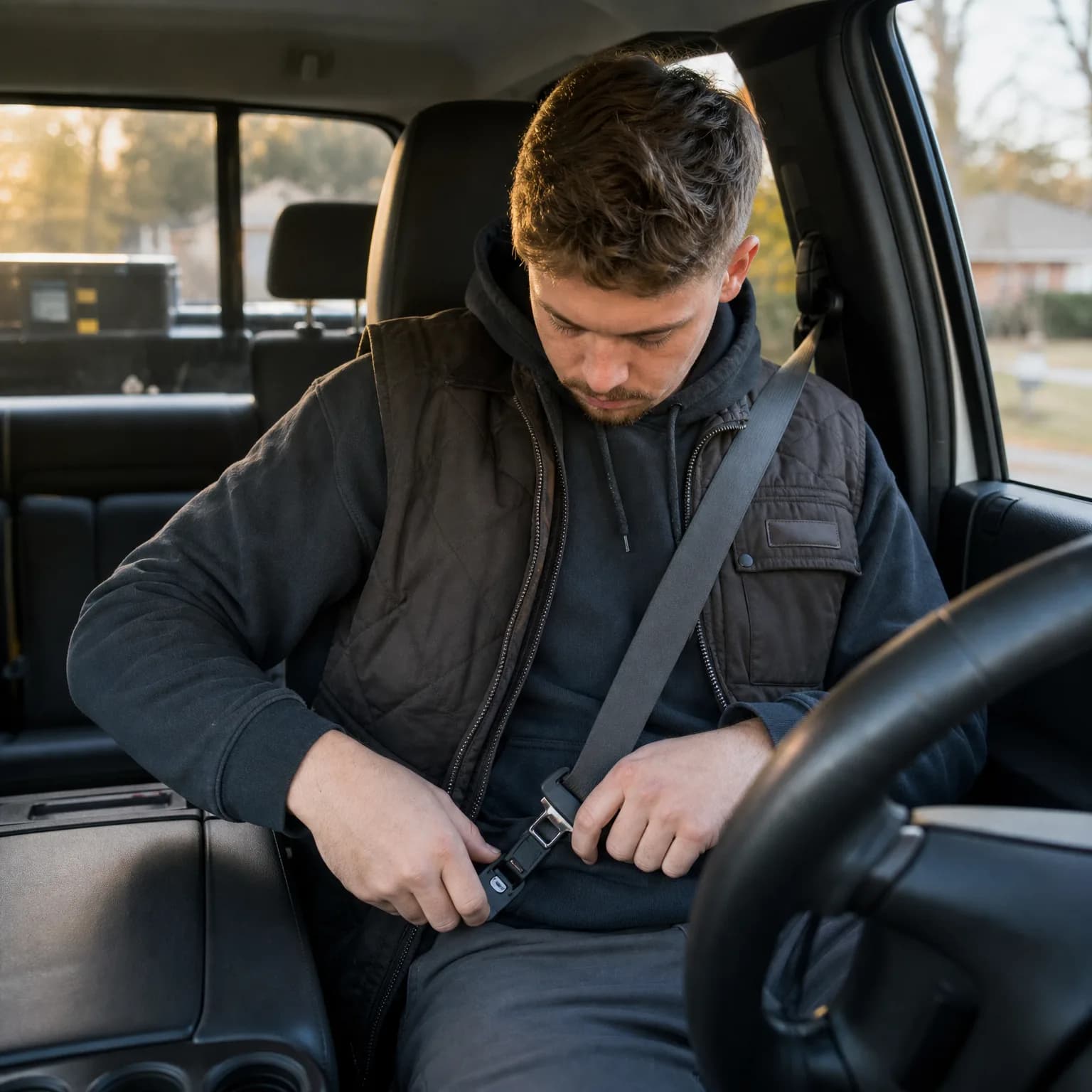
Your occupational license restricts you to court-defined routes, purposes, and hours. Driving outside those parameters—commuting at unauthorized hours, detouring for personal errands, driving for recreational purposes—violates the license terms and triggers automatic revocation without warning in most Wisconsin counties.
If law enforcement stops you while driving on an occupational license, you must carry the signed court order and the physical occupational license document. The officer verifies your current location and time against the court-approved schedule. Violations result in a new citation for operating after suspension, which carries 6 demerit points, potential jail time, and immediate license revocation. The new charge also resets your SR-22 filing period and adds another $60 reinstatement fee.
Wisconsin courts have full discretion to deny occupational license petitions filed after a violation during a prior occupational license period. If you lose your occupational license due to non-compliance, you serve the remainder of the original suspension without restricted driving privileges. Most judges view occupational license violations as bad-faith failures rather than mistakes. Document your driving schedule meticulously and stay within approved hours.
Insurance Options During and After Suspension
During your suspension, you need an SR-22-certified auto insurance policy to petition for an occupational license. If you own a vehicle, you maintain standard liability coverage on that vehicle. If you do not own a vehicle but need to drive for work using an employer's vehicle or occasional rentals, you need a non-owner SR-22 policy.
Non-owner policies cost less than standard policies because they cover only liability for vehicles you do not own. Typical Wisconsin non-owner SR-22 premiums for multi-violation drivers range $40–$80 per month. Standard policies with SR-22 filing for owned vehicles typically cost $140–$220 per month for drivers with 12-point suspension histories. Estimates based on available industry data; individual rates vary by age, county, and carrier underwriting.
After reinstatement, shop your policy annually. Many carriers re-rate your risk profile after 2–3 years of clean driving. Your violation points expire from your Wisconsin record 5 years from conviction, but insurance carriers typically look back 3 years when calculating premiums. A 4-year gap between your last violation and a new quote significantly lowers your rate.
Frequently Asked Questions
Can I get an occupational license in Wisconsin if I have 12 points from speeding tickets?
Yes. Wisconsin allows occupational license petitions for points-cause suspensions with no mandatory waiting period. You petition the circuit court in your county, provide proof of essential driving need (work, school, medical), and file SR-22 insurance before the court issues the order.
How long does a 12-point suspension last in Wisconsin?
Two months for a first points-cause suspension, 4 months for a second offense within 4 years, and 6 months for a third offense within 4 years. The suspension clock starts on the effective date listed in your WisDOT notice, not the date of your final violation.
Does completing a defensive driving course remove points in Wisconsin?
Yes. Wisconsin allows you to remove 3 demerit points once every 3 years by completing a state-approved traffic safety course. The credit does not reverse a suspension already issued, but it can prevent suspension if completed before you reach 12 points.
How much does SR-22 insurance cost in Wisconsin after a points suspension?
Typical Wisconsin SR-22 premiums for multi-violation drivers range $140–$220 per month for standard policies on owned vehicles, or $40–$80 per month for non-owner policies. Rates vary by age, county, violation history, and carrier underwriting.
What happens if I drive outside my occupational license hours in Wisconsin?
Driving outside court-approved hours, routes, or purposes triggers automatic license revocation and a new citation for operating after suspension. The new charge carries 6 demerit points, potential jail time, and resets your SR-22 filing period.
Do I need to retake the driving test after a Wisconsin points suspension?
No. Standard points-cause suspensions allow reinstatement by paying the $60 fee and maintaining SR-22 filing for 3 years. You only retake the written and road test if your license was revoked rather than suspended.
How long does SR-22 filing last after a Wisconsin points suspension?
Three years from the date WisDOT requires it, typically from your occupational license issue date. If your policy lapses during the 3-year period, WisDOT suspends your license immediately and the 3-year clock resets from the new filing date.
Related Articles

How Long Wisconsin Points Stay on Driving Record
5/18/2026

Nebraska 12-Point Suspension: Work Permit & Reinstatement
5/18/2026
12 Points in 2 Years in Ohio: Suspension Process Explained
5/18/2026

WV Point System: Threshold Math & Reinstatement
5/18/2026

12 Points in 12 Months Florida: Automatic Suspension Rules
5/18/2026

Kentucky 12-Point Suspension: Hardship & Reinstatement
5/18/2026